
Water is coming in right now. What do I do first?
Shut the water off at the fixture stop or the main. Turn off power to the affected area at the breaker. Move what is on the floor. Photograph everything before you touch it. Then call a certified restoration company.
Watch: the first hour after a water loss
What to do in the first hour, in order
This is the same order our technicians work in when they walk into a house. Do as much of it as is safe. Nothing here requires a tool you do not already own.
- Stop the water. Close the stop valve under the sink or behind the appliance. If the valve will not turn, close the main shutoff where the water line enters the house.
- Kill the power to the wet area at the breaker panel before you step into standing water, but only if you can reach the panel without standing in water. If water is touching the panel or any cords, do not step in: call an electrician. Water on a floor is an electrical hazard before it is a water problem.
- Get everything off the wet floor. Rugs, boxes, shoes, anything with paper or fabric in it. Furniture legs on wet carpet will stain the carpet within hours.
- Photograph and video everything before you move anything else. Wide shots of each room, then close shots of the failed part and of the water line on the walls. This is what your adjuster works from.
- Call and say what failed, how long ago, and how far the water has traveled. Those three facts decide what equipment leaves our shop.
Real jobs, before and after
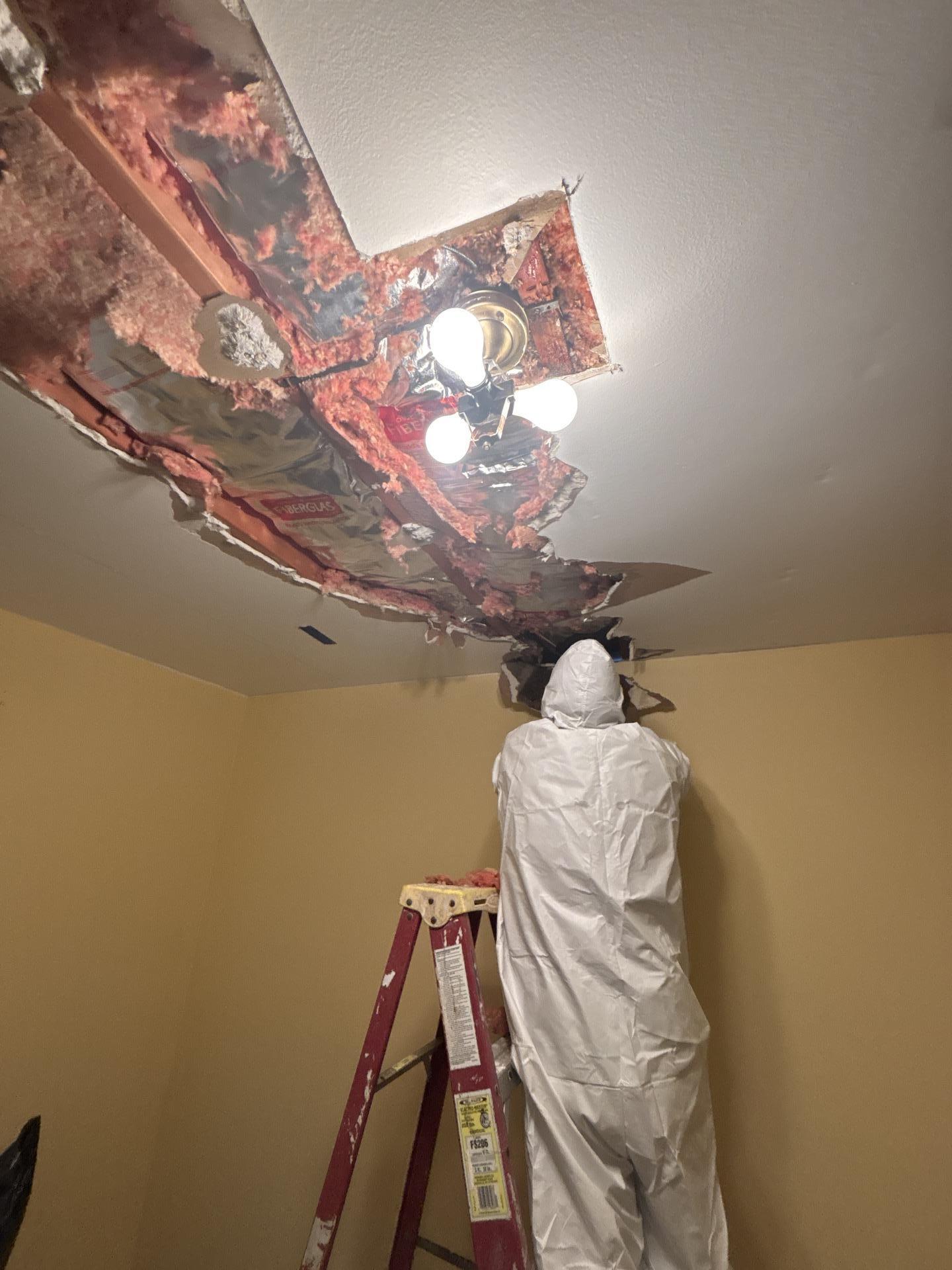
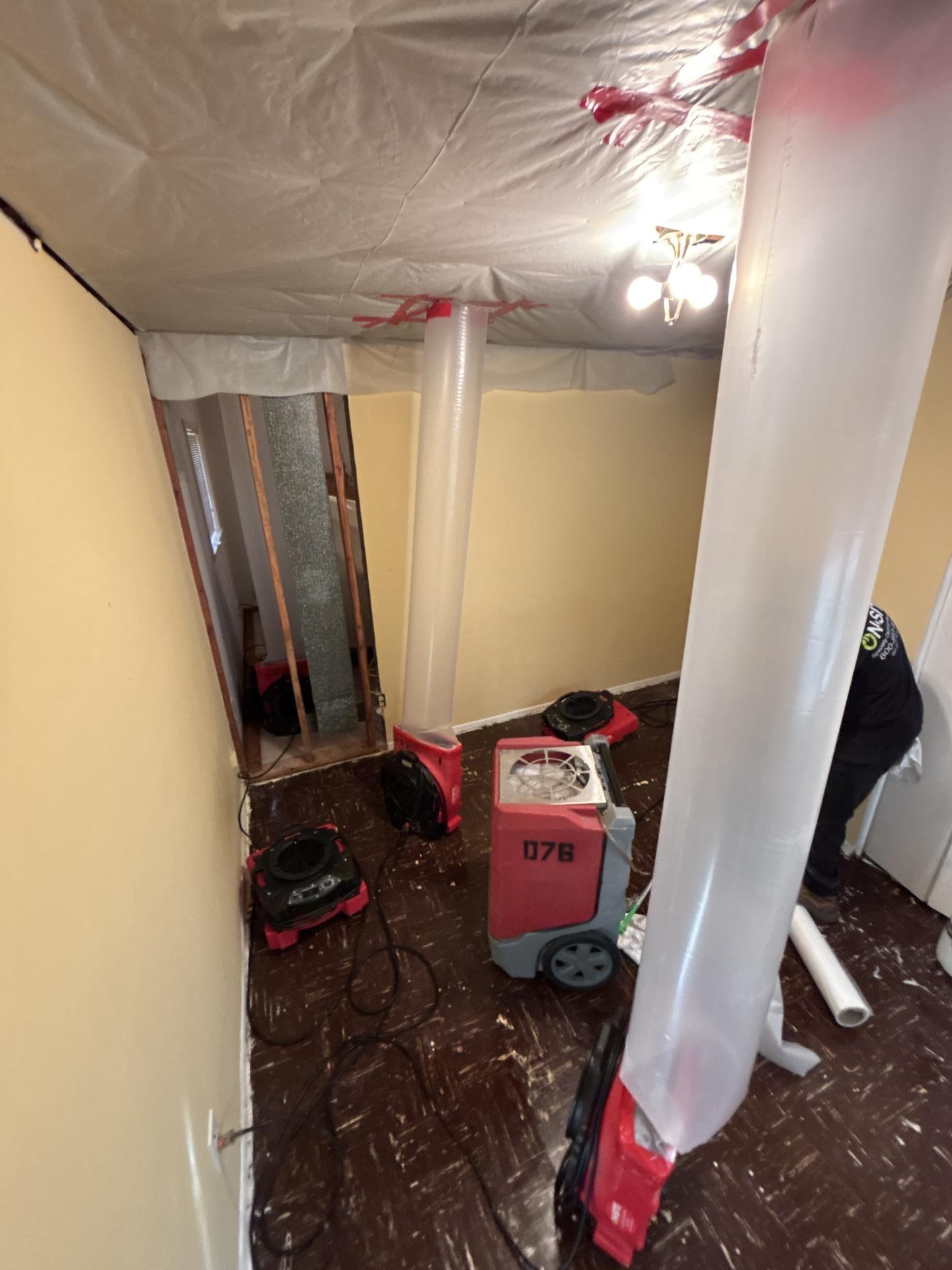
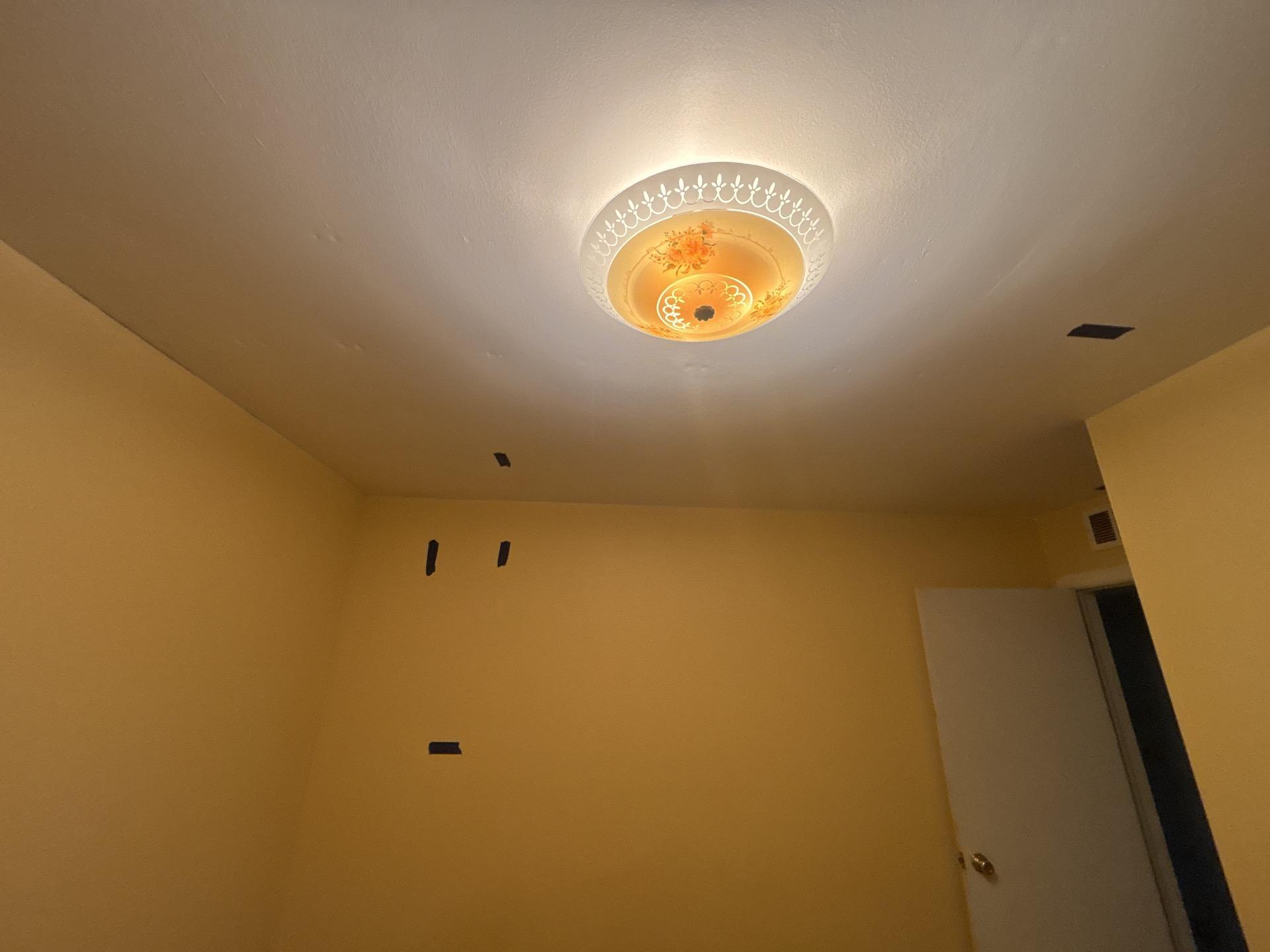
A recent job of ours in Dearborn Heights: a tree came down in a storm and rain got into a bedroom ceiling. Before, during and after.
Why the first hour decides the size of the job
Water does not sit on the surface waiting for you. It wicks into drywall, subfloor, carpet pad and insulation within two to four hours, and it travels along the path of least resistance, which is usually under a wall and into the next room.
A floor that looks dry on top is often saturated underneath. That is why our technicians measure moisture in the structure with meters and thermal imaging instead of judging by appearance. It is also why IICRC certification matters here: the standard sets how dry the material has to be before the equipment comes out, so the job ends on a reading rather than on a guess.
The practical consequence is simple. A loss caught in the first hour is usually a drying job. The same loss found three days later often means cutting out wet drywall, flooring and cabinets.
Which everyday failures this covers
The six causes below account for most of the residential water losses we respond to in Metro Detroit. Storms make the news, but these are what actually floods a house.
- Burst supply line under a sink or behind a toilet
- Toilet overflow
- Washing machine or dishwasher hose failure
- Washing machine discharge line backing up
- Refrigerator icemaker line leaking behind the wall
- Sump pump failure, often during a power outage
Will insurance pay for this?
Most homeowners policies cover sudden and accidental water damage, and most exclude damage that built up slowly from a leak you could have found. What decides a claim is usually documentation, not argument, which is why step 4 above matters as much as step 1.
Your insurer may suggest a contractor, but the choice is yours. Our guide to insurance and claims for water losses walks through what the adjuster needs and in what order.
Frequently asked questions
Will the water dry on its own if I open the windows and run fans?
Surface water will evaporate. The water inside the subfloor, the wall cavity and the carpet pad will not, and that is where the damage happens. Household fans move air but do not remove moisture from the air, so in a closed house they often just spread humidity into dry rooms.
Can I use my shop vac or household vacuum on wet carpet?
A shop vac rated for water will pull free water off a hard floor safely. It will not pull water out of the pad under a carpet, and a household vacuum is an electrocution risk on a wet floor. If the carpet is wet, the pad underneath is holding several times more water than the carpet is.
How long do I have before mold becomes a problem?
The commonly cited window is 24 to 48 hours in the right temperature, and finished basements and closed rooms reach it faster. Starting to dry the structure properly inside that window is the whole point of responding quickly.
Do I have to move out while the house dries?
Usually not for a single room loss. Drying equipment is noisy and warm, and it runs for three to five days on a typical job, but most families stay. Whether you stay is a comfort decision, and your adjuster may cover accommodation if the house is genuinely unlivable.
What does it cost to dry out a house?
It depends on how much material got wet, how long it sat, and whether the water was clean, gray or contaminated. That is why the first question on the phone is what failed and how long ago. We can give a realistic range once we know those two things.
You are in Michigan, Ohio and Florida. Who actually comes out?
Our own crews. Water emergencies in Metro Detroit and southeast Michigan are handled from Warren, and in the Tampa Bay region from our Tampa location. In the Toledo region of northwest Ohio we handle contents: cleaning, pack-out and storage. One number reaches all three: (800) 993-9345.
Who we are
On-Site Specialty Cleaning + Restoration. Certified technicians, 24/7, serving Metro Detroit and southeast Michigan and the Tampa Bay region, with contents cleaning and storage in the Toledo region of northwest Ohio. Always On to help get your life back to normal.
Call (800) 993-9345. We answer 24 hours a day, every day.
Related guides
- Does homeowners insurance cover a burst pipe or an appliance leak?
- What happens to my belongings after a house fire?
- Water, fire and mold: the questions Michigan homeowners actually ask
Full transcript
Read the transcript of the film
When water floods in, the first 24 hours decide how much you lose. First, safety: shut the water off at the main. If it’s anywhere near outlets or your electrical panel, cut the power. Then document everything: photos and video of the damage before you move a thing. Your insurer will need it. Move valuables up and start removing water, but move fast, because mold can begin in 24 to 48 hours. A mop can’t reach the moisture trapped inside walls and subfloors. Certified crews with commercial extraction and drying equipment can. The faster the response, the smaller the loss. When it matters most, we’re always on. Call On-Site.